On Monday, June 7, 1999 the phone rang at the Arapahoe County Sheriff's Office. The call came from the Family Support Division requesting a well check on the supervisor at the Arapahoe County District. An investigator arrived at an apartment complex at 6500 E. Dayton Street in Englewood, Colorado. Rebecca Ann Bartee did not show up for work earlier that morning, and she had taken home a file that the detective was ultimately there to retrieve. As he scanned through the rooms he noticed a glass filled to the brim with red wine that lacked any noticeable lip and fingerprints. When he reached the bathroom, his Monday blues transitioned into horror when he saw the 41 year-old woman whose head was under water near the drain of the practically overflowing bathtub.
With a quick glance, this scene can easily be mistaken for a suicide, but it did not take the police long to realize these props were more than likely designed by the hands of the killer.
Rebecca moved to Colorado in May of 1999. She was divorced, and had a teen aged daughter who was handicapped and with her caregiver when Rebecca's life was mysteriously taken. She was a former prosecutor who worked against men who refused to make child support payments. This hard work ethic even got her sued while she was in Kansas. Beings how she was only a few weeks into her new job, she did not have any cases filed in this state yet. Rebecca lived in a rural area, but apparently was very cautious and street smart from her somewhat dangerous occupation. Even though she was known to have the heart to open the door and lend a helping hand for anyone, her family claimed she was a little fearsome of living on the bottom floor, and as a result, was the chronic door locker type. Most importantly, Rebecca was known for loathing baths so much that her mother insisted she had not taken a bath in over twenty years! (I can relate to this bath hatred, so please remember I would never be caught dead in one...unless someone put me there).
The crime scene investigation and autopsy of the four foot, ten inch body generated more questions than answers on what happened on this particular weekend. Rebecca left work on Friday, June 4, 1999 at 5:30pm, and the police are confident she was not alive much longer after that because there was a message on her machine from her daughter's caretaker urging her to call immediately. Remember that untouched glass of red wine? Ironically, no red wine bottles were found in her apartment. There wasn't even red wine in her system. There were empty pill bottles found in her trash, however, no pills were found in her home, nor in her body. Her family pointed out how out of character it was for their loved one to dispose of anything holding personal information on it...especially when she had an active paper shredder.
Both sides of Rebecca's knees were covered in bruises. There was an imprint on her back of a unique chain used to stabilize phone books in phone booths, and if you guessed that the chain was not found in her apartment, you are correct, my friend. There were no signs of sexual assault, but unfortunately a bath could have made that evidence disappear, unlike the pills and wine bottle. There was nothing found in the bathroom that would suggest one was preparing for a bath like towels or a robe, but towels were found in another room. New towels and a bathroom rug were found in the washer, which usually is not out of the ordinary...except when the white towels are stained from being washed with a purple rug. A bottle of bleach was also found out on a counter near the dryer. This bleach was used to wipe numerous surfaces clean throughout the apartment.
As the deceased body dried at the funeral home in Kansas, obnoxious hand and nail marks around the neck grew so apparent that the police were notified again. Think about it...if someone is standing behind you and strangling you with something, you involuntarily use all your might with your fingers to try and grab the thin object that is lodged in your skin and stealing your breathe away. A victim in this scenario is so studied on loosening that grip that they in actuality leave half moon fingernail cuts and bruises on their own neck.
On top of all this cryptic evidence, there is controversy on how exactly the killer got into the apartment. Investigators said the dead bolt was locked, however, Rebecca's sister, who is a civil attorney, claims that investigators revealed they were not certain if it was or not. No house keys were missing. A window in Rebecca's bedroom was unlocked, but dust covered the sill which proves it was not opened at any recent time. Rebecca's brother, a Kansas police officer who worked on over fifty murder cases, believes the window was unlocked by the killer in an attempt to stage his entrance.
All the suspects in this crime were cleared. Any child support rebellion who probably did not think highly of the victim was pushed aside along with Rebecca's ex-husband, who remarried weeks after the death and had a solid alibi. So, here we are with no suspects, no trace of a killer, no motive, no forced entry, no murder weapon, and no red wine bottle. As if this was not discouraging enough, the same forensic pathologist who ruled Rebecca Ann Bartee's death a homicide by strangulation, Dr. Michael Doberson, has stated fifteen years after the gruesome discovery that it is possible that natural causes could have been responsible. According to him, the strangulation marks could have resulted from the blood settling from the position of the head and body. What the fuck? In Dr. Doberson's defense, he is retired, presently haunted by this death, and still keeps in contact with the Bartee family, whom, like myself, still believes this is without a doubt a murder...especially since the same thing happened again less than a year later...
Helen Towers was a 69 year-old woman who lived alone in Littleton, Colorado. She was a legal assistant for a prominent district attorney in Arapahoe County and had a passion for dancing. In March of 2000, Helen confided in her daughter, Julie, that she was finding mysterious notes on her red Monte Carlo car. On April 1, 2000, neighbors informed Julie that Helen's newspapers were piling up outside and that her house had been dark for several days. Ironically, when Julie and the police showed up at Helen's house, there was a fresh, red rose on the snow covered door step. Officers maneuvered into the home through unlocked kitchen windows. Here we go again...Helen's body was found in an empty bath tub with nothing linking her body to violence or any substance abuse. With her lights unplugged, the phone off the hook, and threatening notes stuffed in her purse, Helen Towers' death was determined to be caused on March 28, 2000 and labeled as undetermined.
The Towers' family, like the Bartee family, know in their hearts that this is a homicide. Through my research, I read that another ballroom dancer from the other side of town also received similar notes on her red sports car, but I was unable to find anymore details on this. Not for nothing, but where the fuck did that red wine come from in Rebecca's apartment?
Maybe there is a red link that ties these puzzles together, but honestly, I don't think so. A bath tub can absolutely signify a killer's modus operandi, but it sure as shit can practically and solely be used to wash away evidence. In my research, it's been stated that if Rebecca was murdered, her killer was in her home for a substantial amount of time. That can very well be true for Helen too, but it does not tell me that these culprits are the same person.
Many different scenarios flash into my mind when I ponder all the possibilities of what could have happened to these women. But ultimately, in my heart, I believe that Helen's murder was committed by a random stranger, who very likely has a red fetish, love for bathtubs, and probably met these sports car driving ladies at a dancing bar when he decided to indulge in his obsession and stalk them like a typical serial killer. Leaving notes is a risky explosion of self absorbance and security. But Rebecca...her crime stands out in a unique way in my eyes. I think her killer was someone who wanted her specifically dead, or was hired to carry out this particular murder. The details and attempts of cover up just don't strike me to originate from a serial killer. A serial killer wants to show off his work. No serial killer wants to risk their artwork being labeled as a self induced suicide.
Thursday, June 30, 2016
Tuesday, January 19, 2016
THE CHERRY CREEK CREEPS
![]() |
| Photo Credit to Tori Hunt |
When I was born in February of 1985, I was unaware that a
brutal murder was about to take place just minutes away from where I would move
to thirty years later. When people
hear Cherry Creek State Park, many beautiful images pop into their minds. They see exciting ideas of camping,
fishing, picnicking, kayaking, and endless summer activities. But not me. I think of Vicki Carpenter whose murdered body was found,
just across the way of those family feasts of fun, in the Cherry Creek
Reservoir Spillway in Arapahoe County in Colorado.
Vicki Carpenter was a twenty-four year old swimsuit model
who spent hardworking hours at a King Soopers grocery store in Aurora,
Colorado. She was a Denver Temple
Baptist Academy graduate who was sincerely fond of country western
dancing. She was separated from
her husband, Paul, and she raised their son, Justin, who was three at the time
he lost his mother to a maniac.
On February 19, 1985, Carpenter’s mother, Lynette Clements,
reported her daughter missing after she failed to return home from a modeling
show at Knick’s Restaurant and Saloon, located at 7800 E. Hampden Ave in
Denver. Paul located her abandoned, 1967 Buick Regal a half mile down the road
from the show in the parking lot of the Lodge Apartments at 8400 E. Hampden
Ave. Although witnesses who
attended the show reported seeing Vicki leave alone without suspicion, one of
her tires was apparently flat from the jagged edge of a knife being
intentionally slashed into the rubber.
An abundance of volunteers grouped together to complete numerous
searches, but Vicki was nowhere in sight.
After two months worth of built up fear, questions, and
concerns, Lynette finally received the news that every local dreaded
hearing. On April 2, 1985, two
young fishermen found Vicki Carpenter’s lifeless body. As if this demented discovery was not
scarring enough for fourteen-year old Scott Buyer, he was later informed the
same body that disrupted his childhood belonged to his past neighbor and
babysitter. He revealed in an interview
that he touched Carpenter’s arm only to witness the flesh peel right off the
bone.
Bruce Isaacson and other investigators detected two cylinder
blocks, tied to a chain from a swing-set wrapped around her decomposing neck,
which was manipulated to hold the body underwater. Between the condition of the body and the
evidence-eating water, police were left with minuscule clues and had to resort
to educated guesses and prior experience to piece this mystery together. Although they were unable to determine
the cause of death, investigators do believe Carpenter was strangled. Not only were there visible bruises on
her neck, but it was also stated that the chain was manually connected to the
blocks that caused her body to sink.
Any DNA evidence, including semen and blood from the killer, would have
deteriorated in the water. The
amount of time the body saturated in the reservoir was also unknown. Although it was thought that Vicki’s
life was taken from her shortly after her abduction and likely sexual assault,
the possibility that she was held captive for a period of time still
remains. I learned through
research that a critical and detailed piece of this puzzle was withheld from
the public in the hopes of eliminating any fabricated tips that may have come
in.
Despite the lack of indications in the case, investigators
did express some hunches they do believe are true. They have been lead to assume this mystery murderer stalked
his victim to the extreme of not only disabling her car, but also watching her
perform in the show. He then
proceeded to follow her on the road and waited for this vulnerable girl to pull
over due to an automobile dysfunction.
Regardless if he immediately attacked Vicki or simply lured her into his
vehicle with false offers of help, this predator was executing his carefully
constructed plan. The presence of
the deadly chain revealed that this slaying was arranged and premeditated.
Naturally, all of Vicki Carpenter’s previous lovers,
including Paul, were interrogated and eventually passed polygraph tests, which
ultimately resulted in police having zero suspects in custody and unsubstantial
clues being phoned in. With the 31st
anniversary of this crime rapidly approaching, it is as cold as ice. Although the future holds no possible
closure through DNA matches, this case can still be solved if a silent witness
comes forward. Surely somebody had
to have seen this culprit slash a car tire and immorally watch a swimsuit show
with no intention of ever wearing one.
Somebody had to have driven by this red car with a noticeable flat tire,
or even witnessed foul play in the parking lot through their apartment
window. This soulless person must
have had some type of companion he went home to after committing such
horror. I believe in my heart that
somebody holds the key that can finally melt this cold case and provide closure
to Vicki’s, now 34-year old, son.
So what do I think happened? Thanks for asking! Although the limited leads known all
point to an assailant who was a stranger to the victim, I think otherwise and
this is why. Assuming you read my
previous blogs, we all know DNA was never a threat to perpetrators until 1987,
so why did this malicious killer go through such great lengths to hide the
body? Perhaps he was aware DNA was
going to fully progress in the very near future, but in reality, just dumping a
body in water would eliminate that precaution. This killer increased his chances of being seen by a witness
in order to make sure this body was heavily weighed down. Typically, psychopaths want their
“artwork” found, studied, and broadcasted, but not this particular guy. Although he was conclusively
unsuccessful, he attempted to literally make Vicki Carpenter’s body disappear
forever. In my opinion, this is
psychological proof that this was not a random hit.
Like I stated in a previous paragraph, Paul was eliminated
as a suspect due to passing a lie detector test. Even to this day, these types of tests are not 100%
accurate, not to mention, these results do not eliminate the fact that the
father of the victim’s son did not hire someone to kill the one link preventing
him from gaining full custody of his child. After all, he was the one who found her car, and there is no
proof the tire slashing occurred before the murder. This can very well be a perfected and staged crime with an
obvious motive.
For some reason, I do not think Paul is responsible for this
obscenity. I do, however, think
Vicki knew her killer. Some can
argue that every local and Aurora native is fondly familiar with the Cherry
Creek Spillway, but isn’t it oddly suspicious that a previous neighbor of the
victim found her body? I obviously
do not believe a young teenager could perfect this deranged crime, but I do
think someone who possibly introduced that young boy to those fishing waters is
a likely suspect. I’m thinking of
a man who could innocently and repeatedly visit his own crime scene without
alerting suspicion. Perhaps
someone like the father of Scott Buyer could possibly be behind all of
this. A man who hired a young,
beauty to watch his children has a clear motive in my eyes. How many movies and storylines open up
with a babysitter who declines an older man’s sexual advances. This individual’s obsession and
knowledge of the victim could have very well escalated to a crime as terrifying
as this one. I understand you
can’t just go around pointing your finger at every person who has the physical
ability to pull this off, but I absolutely think there is more underlying
potential here than just a simple stalker laying his eyes on his prey and
impulsively conquering her. Only
time can tell…
Thursday, January 14, 2016
Y100 Feztival
Have you ever attended the Y100 Feztival? Have you even heard of such
madness? If you were not an
instrument-loving hipster living in the east coast ten to twenty years ago,
then all of this may bring a new jingle to your ears.
My very first exposure to live music was on Wednesday, June
28, 2000. I was fifteen years old
with shiny braces that had yet to be soaked with alcohol. At first, the sight of 7,000 rambunctious
people intimidated me, however, I kept reminding myself how nine of my favorite
bands were all going to perform on only one stage. After all, this was
the Y100 Feztival that all the older kids were raving about. I never knew how much my love and
appreciation for music would intensify when I put on the Fez hat that they were
handing out at the door.
The Y100 Feztival was brought to Philadelphian and New
Jersey music lovers by the alternative rock radio station Y100, or 100.3
FM. It was the only local concert
you could see numerous bands perform without camping out for a whole weekend. These concerts were always hosted at,
what used to be called, the E-Center in Camden, NJ. The most unique and intriguing element about this venue is
their “lawn area.” Typically,
concerts are held in huge, arena-like rooms with assigned seating. The E-Center has this too of course,
but the best and cheapest seats were located on the general admission
lawn. Groups of friends would
march in with their blankets and claim their area for the show. Instead of interrupting all your seated
neighbors every time you had to use the restroom or refill your drink, you
simply got up without disturbing anyone in the ample space and did your
business. There are not many
places nowadays where you can light up a cigarette in your seat without missing
a single guitar note.
For an estimated $15, I had a golden ticket to see 3 Doors
Down, Eve 6, Good Charlotte, Lit, Stroke 9, No Doubt, Third Eye Blind, the
Violent Femmes, and even Scott Weiland with the Stone Temple Pilots, and I did
not have to run from stage to stage to see everyone. Unfortunately, Y100 only existed from the nineties until
2005. There were only eight annual
Feztivals available from 1997 to 2004.
I still cannot decide if I miss the radio station or the concerts
more. The day I learned my number
one preset on my car radio was no longer blaring rock music, I hit the volume
off quicker than I do now when I hear Justin Beiber. The heartbreak of no more summer Feztivals can still be felt
after all these years.
Although there will never be another Y100 Feztival, or even
something remotely comparable, there is still time to check out the venue. The E-Center, or the Blockbuster Sony
Music Entertainment Centre, opened in 1995. In the middle of the Y100 days, the venue name was changed
to the Tweeter Center in 2001. In
2007, the Susquehanna Bank Center took over the name and left their signature
on most of my concert ticket stubs.
I just learned today that it was recently purchased for about double the
amount of last night’s Powerball Lottery, and it is now known as the BB&T
Pavilion.
No matter what name my Google search labels this venue as, I
will always remember the stunning tunes that pierced my ears there, and I will
always cherish my Fez hat.
Sunday, January 10, 2016
ICE COLD CASES
"A cold case is a crime or an accident that has not yet been fully solved and is not the subject of a recent criminal investigation, but for which new information could emerge from a new witness testimony, re-examined archives, retained material evidence, as well as fresh activities of the suspect. New technical methods developed after the case can be used on the surviving evidence to re-analyze the causes, often with conclusive results." Thanks, Wikipedia.
While researching and photographing different cold cases in Colorado, I decided to research a bit more into my obsession. Don't worry, I currently have a few spine-tingling blogs on the back burner, but first, I want to explain not only the importance of cold cases, but also the unknown reality behind them. I assure you that cold cases aren't as rare as one would assume. I researched a few different sites, including National Geographic, NBC News, The Denver Channel, and the Telemasp Bulletin which is the Texas Law Enforcement Management and Administrative Statistics Program, and I found some interesting percentages and factual information that we all should be aware of.
Guess how many cold cases are open today in America, dating back only to 1980? Guess higher. 200,000 cold cases. Apparently, today's "national clearance rate for homicide" is 64.1%. That literally estimates that only two of every three murders get solved. According to my research, fifty years ago the clearance rate was 90%. I am slightly concerned in exactly how much of that 90% is actually full of 100% guilty verdicts, but I do acknowledge the obvious and rapid decline in numbers over the years. I am also considering the fact that DNA was discovered about thirty years ago, so a majority of this 90% was also solved without DNA.
Researchers and detectives believe the increase in cold case files is a result of a few things including lack of experienced detectives and an increase in murders where the killer and victim are strangers. Although I have assumed that cold case special units have existed as far back as murderers began perfecting their art, the truth is these specified groups were not created until the 1980's in the Miami Police Department. Unfortunately, cold cases are not worked in chronological order, but rather in priority ratings. In other words, these detectives begin with cases that are more likely to be solved. Whether there is previously existing clues and witnesses to be re-examined or newly collected evidence to be looked into, these cases hold priority over ones where no substantial evidence was ever found at the time of the crime. It is not a secret that the United States has the highest number of unsolved murders. According to NBC News, there were a reported 4,566 homicides in 1963 and 14,811 in 2007. It is concluded that approximately 6,000 murders turn ice cold every year.
The District of Columbia's Metropolitan Police Department did a study using 189 cold cases. I think this is significant in not only showing why cold case units were developed, but also how effective they can be. They were able to convict 24% of the culprits and were able to eliminate another 24% through "exceptional" means which labeled the killer as either dead, already serving a prison sentence, or missing. Even though 99 of these 189 cases remain open, I still believe that each and every one is a successful task. That's 90 families who finally received some sort of closure that they did not already have.
Thanks to the Telemasp Bulletin, I was able to study the percentages of specific types of crimes growing into cold cases. For example, 21% of drug related killings turn cold, while 14% of gang related murders and 14% of murderers who know their victims go unsolved. Another 13% of these cases are unsolvable due to the incapability to identify the victims.
Another reason so many cases have yet to be closed is a result of the actual time-consuming police work required is not what most people assume. So many television shows spoil viewers and provide us with the cessation of crimes within thirty to sixty minutes when in reality, these investigations take way more than an hour to serve justice. It's simple to understand why these homicidal puzzles take so long to put together when you consider the amount of time it takes to locate and interview suspects and witnesses. Also, the amount of time it takes for physical evidence to be properly probed is not instantaneous. Cold case investigators justifiably spend hours and hours reviewing files, re-interviewing witnesses, examining physical evidence, and communicating with previous investigators who have past experience with individual cases.
The focus I possessed when I began my research on unsolved crimes was to ultimately discover how cold cases are eventually and finally solved. Ironically, I seem to have stumbled on somewhat of a disagreement on what the key element is behind closing crimes from many years ago. Some percentages hold DNA as the breadwinner, whereas some claim new witnesses are mostly responsible for successfully sealing cases. My opinion? Well, I think both are equally powerful when dealing with these cases. Here's why.
The very first crime where DNA was introduced and successfully delivered justice was on November 6, 1987. Circuit Court in Orange County, Florida used DNA, which consists of biological materials including skin, hair, blood, and bodily fluids, to serve justice to rapist, Tommie Lee Andrews. I bet that mother fucker did not see that coming. Thanks to DNA, law enforcement was able to create a database that consists of over five million convicted criminal records. All fifty, American states require sex-offenders to contribute their DNA samples as well. It's amazing how many prison sentences are given out with 100% confidence all resulting from DNA development. What is even more astonishing is the fact that all humans share 99.9% of identical DNA sequences. I suppose 0.01% extends more power than the norm would think.
Robert Davis is part of the Police Executive Research Forum, and he states that silent witnesses coming forward solve more cold cases than DNA. I can absolutely see the truth behind his words. Many witnesses are naturally too terrified to speak up about what case closing facts they secretly possess. As year after year passes, the fear and, in some relationships, compassion for the killers disintegrate, allowing people to find the confidence to finally come forward to detectives. Many witnesses are not tied to the murderer any longer through fear, relationships, and friendships after so much time goes by. Some witnesses find themselves in a troubling situation where revealing what they saw years ago can, in return, lighten their own prison term or have another kind of personal benefit as the motivation.
In the middle of my factual research on this cold case topic, I came across a witty, yet educational article on Cracked.com. It is called "5 Mind Blowing Ways People Solved Unsolvable Cold Cases," and i highly recommend it. Two of the five stories really grasped my attention. The first case details the genius idea executed by two detectives, Jim Scharf and Dave Heitzman, In 1979, Snohomish County's Susan Schwarz was fatally shot and strangled in her own home. Her killer was never brought to justice. Thirty-two years later, these two detectives created decks of playing cards with each card detailing different missing people in the area. They dispersed the decks throughout Washington state prisons and offered rewards in exchange for information on the cases. A fifty-seven year old prisoner from Seattle saw a playing card with Susan Schwarz's face on it that struck familiarity, and he surrendered the information to the police. Apparently his exact words were never detailed, however, there is reason to believe he was a silent witness to the crime and was prevented by fear from speaking up.
Another one of the stories in this article is about something I never heard of before, and I want to spread the existence and awareness of it. There is an actual web site dedicated to cold case victims. The DOE Network has claimed to be a "Facebook for the dead." It was created in 1999 and currently supported by the Responsible Volunteer Community by the U.S. Department of Justice. Pretty much, random people post information on missing people and unsolved cases on this web site, and once enough material is collected, it is passed on to the police in the hopes of solving crimes. Some volunteers also donate their time by skimming through pictures of missing people featured on the site and comparing them to pictures of the deceased on the coroner's web site, in the hopes of finding a match and putting a name on a mystery corpse. This site alone has assisted in solving sixty-six cases and located hundreds of people who were missing. Check out www.doenetwork.org and donate some of your time to helping families of victims cease their heart-wrenching questions revolving around their victimized loved ones.
The whole premise of this blog is to express how far awareness can travel, and how much impact it can have on well deserving people. I may not be capable of assisting with DNA, but I am more than eager to attempt to get the attention of silent witnesses by continuing my journey of spreading the awareness of cold cases. I have watched and read numerous cases go from cold to closed all because of witnesses and confessions. People on their death beds with case-solving information on the tips of their tongues, standing between them and the gates of Heaven and Hell can, in my opinion, be easily convinced to spill their guts simply by striking their sense of familiarity through victims' pictures and details. With the same idea as the playing cards, a Cold Colorado Magazine can clearly benefit and assist in closing cold cases. My goal is to create, execute, and disperse this magazine throughout society. If my idea leads to just one cold case being closed, it is a success!
While researching and photographing different cold cases in Colorado, I decided to research a bit more into my obsession. Don't worry, I currently have a few spine-tingling blogs on the back burner, but first, I want to explain not only the importance of cold cases, but also the unknown reality behind them. I assure you that cold cases aren't as rare as one would assume. I researched a few different sites, including National Geographic, NBC News, The Denver Channel, and the Telemasp Bulletin which is the Texas Law Enforcement Management and Administrative Statistics Program, and I found some interesting percentages and factual information that we all should be aware of.
Guess how many cold cases are open today in America, dating back only to 1980? Guess higher. 200,000 cold cases. Apparently, today's "national clearance rate for homicide" is 64.1%. That literally estimates that only two of every three murders get solved. According to my research, fifty years ago the clearance rate was 90%. I am slightly concerned in exactly how much of that 90% is actually full of 100% guilty verdicts, but I do acknowledge the obvious and rapid decline in numbers over the years. I am also considering the fact that DNA was discovered about thirty years ago, so a majority of this 90% was also solved without DNA.
Researchers and detectives believe the increase in cold case files is a result of a few things including lack of experienced detectives and an increase in murders where the killer and victim are strangers. Although I have assumed that cold case special units have existed as far back as murderers began perfecting their art, the truth is these specified groups were not created until the 1980's in the Miami Police Department. Unfortunately, cold cases are not worked in chronological order, but rather in priority ratings. In other words, these detectives begin with cases that are more likely to be solved. Whether there is previously existing clues and witnesses to be re-examined or newly collected evidence to be looked into, these cases hold priority over ones where no substantial evidence was ever found at the time of the crime. It is not a secret that the United States has the highest number of unsolved murders. According to NBC News, there were a reported 4,566 homicides in 1963 and 14,811 in 2007. It is concluded that approximately 6,000 murders turn ice cold every year.
The District of Columbia's Metropolitan Police Department did a study using 189 cold cases. I think this is significant in not only showing why cold case units were developed, but also how effective they can be. They were able to convict 24% of the culprits and were able to eliminate another 24% through "exceptional" means which labeled the killer as either dead, already serving a prison sentence, or missing. Even though 99 of these 189 cases remain open, I still believe that each and every one is a successful task. That's 90 families who finally received some sort of closure that they did not already have.
Thanks to the Telemasp Bulletin, I was able to study the percentages of specific types of crimes growing into cold cases. For example, 21% of drug related killings turn cold, while 14% of gang related murders and 14% of murderers who know their victims go unsolved. Another 13% of these cases are unsolvable due to the incapability to identify the victims.
Another reason so many cases have yet to be closed is a result of the actual time-consuming police work required is not what most people assume. So many television shows spoil viewers and provide us with the cessation of crimes within thirty to sixty minutes when in reality, these investigations take way more than an hour to serve justice. It's simple to understand why these homicidal puzzles take so long to put together when you consider the amount of time it takes to locate and interview suspects and witnesses. Also, the amount of time it takes for physical evidence to be properly probed is not instantaneous. Cold case investigators justifiably spend hours and hours reviewing files, re-interviewing witnesses, examining physical evidence, and communicating with previous investigators who have past experience with individual cases.
The focus I possessed when I began my research on unsolved crimes was to ultimately discover how cold cases are eventually and finally solved. Ironically, I seem to have stumbled on somewhat of a disagreement on what the key element is behind closing crimes from many years ago. Some percentages hold DNA as the breadwinner, whereas some claim new witnesses are mostly responsible for successfully sealing cases. My opinion? Well, I think both are equally powerful when dealing with these cases. Here's why.
The very first crime where DNA was introduced and successfully delivered justice was on November 6, 1987. Circuit Court in Orange County, Florida used DNA, which consists of biological materials including skin, hair, blood, and bodily fluids, to serve justice to rapist, Tommie Lee Andrews. I bet that mother fucker did not see that coming. Thanks to DNA, law enforcement was able to create a database that consists of over five million convicted criminal records. All fifty, American states require sex-offenders to contribute their DNA samples as well. It's amazing how many prison sentences are given out with 100% confidence all resulting from DNA development. What is even more astonishing is the fact that all humans share 99.9% of identical DNA sequences. I suppose 0.01% extends more power than the norm would think.
Robert Davis is part of the Police Executive Research Forum, and he states that silent witnesses coming forward solve more cold cases than DNA. I can absolutely see the truth behind his words. Many witnesses are naturally too terrified to speak up about what case closing facts they secretly possess. As year after year passes, the fear and, in some relationships, compassion for the killers disintegrate, allowing people to find the confidence to finally come forward to detectives. Many witnesses are not tied to the murderer any longer through fear, relationships, and friendships after so much time goes by. Some witnesses find themselves in a troubling situation where revealing what they saw years ago can, in return, lighten their own prison term or have another kind of personal benefit as the motivation.
In the middle of my factual research on this cold case topic, I came across a witty, yet educational article on Cracked.com. It is called "5 Mind Blowing Ways People Solved Unsolvable Cold Cases," and i highly recommend it. Two of the five stories really grasped my attention. The first case details the genius idea executed by two detectives, Jim Scharf and Dave Heitzman, In 1979, Snohomish County's Susan Schwarz was fatally shot and strangled in her own home. Her killer was never brought to justice. Thirty-two years later, these two detectives created decks of playing cards with each card detailing different missing people in the area. They dispersed the decks throughout Washington state prisons and offered rewards in exchange for information on the cases. A fifty-seven year old prisoner from Seattle saw a playing card with Susan Schwarz's face on it that struck familiarity, and he surrendered the information to the police. Apparently his exact words were never detailed, however, there is reason to believe he was a silent witness to the crime and was prevented by fear from speaking up.
Another one of the stories in this article is about something I never heard of before, and I want to spread the existence and awareness of it. There is an actual web site dedicated to cold case victims. The DOE Network has claimed to be a "Facebook for the dead." It was created in 1999 and currently supported by the Responsible Volunteer Community by the U.S. Department of Justice. Pretty much, random people post information on missing people and unsolved cases on this web site, and once enough material is collected, it is passed on to the police in the hopes of solving crimes. Some volunteers also donate their time by skimming through pictures of missing people featured on the site and comparing them to pictures of the deceased on the coroner's web site, in the hopes of finding a match and putting a name on a mystery corpse. This site alone has assisted in solving sixty-six cases and located hundreds of people who were missing. Check out www.doenetwork.org and donate some of your time to helping families of victims cease their heart-wrenching questions revolving around their victimized loved ones.
The whole premise of this blog is to express how far awareness can travel, and how much impact it can have on well deserving people. I may not be capable of assisting with DNA, but I am more than eager to attempt to get the attention of silent witnesses by continuing my journey of spreading the awareness of cold cases. I have watched and read numerous cases go from cold to closed all because of witnesses and confessions. People on their death beds with case-solving information on the tips of their tongues, standing between them and the gates of Heaven and Hell can, in my opinion, be easily convinced to spill their guts simply by striking their sense of familiarity through victims' pictures and details. With the same idea as the playing cards, a Cold Colorado Magazine can clearly benefit and assist in closing cold cases. My goal is to create, execute, and disperse this magazine throughout society. If my idea leads to just one cold case being closed, it is a success!
Saturday, January 2, 2016
THE STRANGE COLD IN LOVELAND
While skimming through the endless Colorado cold case files, I came across one that caught my eye. Not only did I learn a lesson that was beat into everyone's head (including my own) at some point in their lives, but I also found something a little suspicious about this case. What do you think?
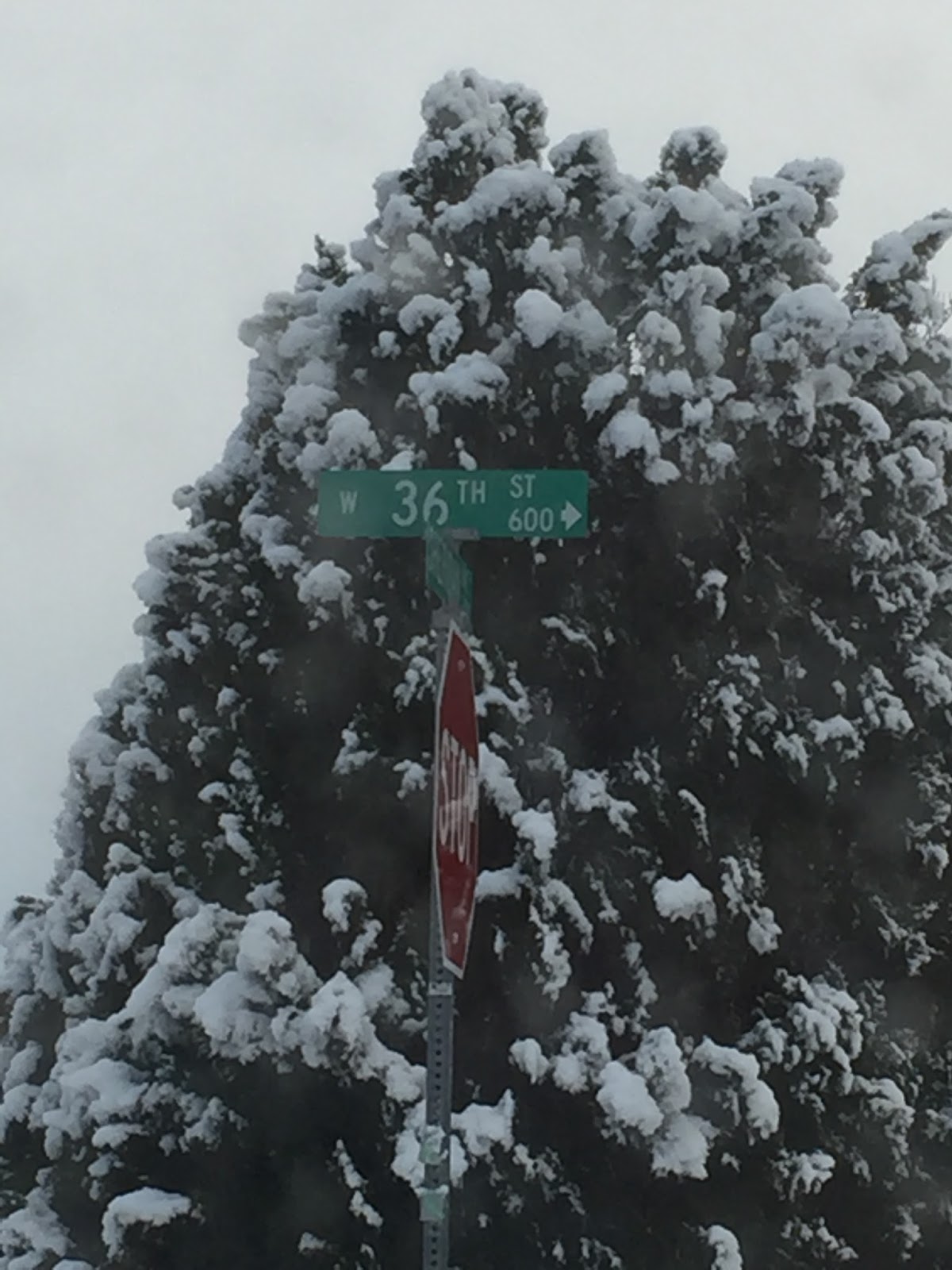
Angela Howard was a thirty-six year-old woman who was shot numerous times to her death in her Loveland, Colorado home on the block of 36th Street and Butternut Drive. If I would have thoroughly looked at the pictures of her home that is shown in just about all twenty different news articles, I would have my own photography of the exterior of her home. Unfortunately, it was not until I drove over an hour back to my apartment when I realized her house number was pictured all over the web. #3615 will live in my memory of regrets for a short while.
On Sunday, February 1, 2015, she was found during a wellness check that was called in to the police from who news sources believed was her ex brother-n-law. Neighbors were also skeptical of her unusual absence for over a week. This was uncommon for the cleaning company owner and mother of an eleven year-old daughter who lived with her father. The people on the block had recently noticed another disturbance in Howard's life which lasted about three months up until her death. It was not long before neighbors, specifically Ken Wiezorek who lived three doors down from her, suspected a domestic violence situation ever since Howard's Philadelphian boyfriend, Russell Woolman, moved in with her. It was apparent that the normally friendly Howard had a drastic change in her personality. The woman neighbors described as being personable and social in the community transformed into a timid character. Howard confirmed everyone's suspicions when she wore an unsuccessfully covered up, black eye to the laundry mat. When police were seen carrying out evidence that included a mattress with numerous bullet holes in it, neighbors all pointed to the same man.
One day and forty miles later, this case blew open when fifty-two year-old Woolman was discovered dead in Howard's missing truck near Lyons, Colorado. The gun found next to his corpse was verified as the one responsible for the bullets in Howard's body. Strangely, there were no signs of traumatic injuries on Woolman, which leads me to assume his death was not caused by gunshots. Huh? It does not take a genius to label this entire scene as outlandish. There is definitely a piece missing in this puzzle.
Police did make it official that Howard's death is a homicide, however, they never really indicated that it was a simple, open and shut murder-suicide case. The police were also were very careful as to the facts they revealed to the public. They declined to give the time of death on either body, and have not released any arrests of suspects. They did, however, state that they don't believe the public is in any related danger. The Rocky Mountain Property Management had contributed zero facts on the crimes. I have read different news sources, some stating the district attorney's office listed Woolman as the suspect they would normally charge if he were still alive, yet the last I heard was that the Boulder County Coroner's Office is still working on the details of his death. This is the strangest part. The latest information I can find on this case is dated back to February 26, 2015.
I don't know about you, but something about this does not sit well with me. Why did this case just disappear, taking all the critical details with it? With all the information neighbors knew about Angela Howard, how were gunshots not heard? When someone murders out of anger, the last thing on their soulless minds is the boisterous sounds exploding from their violence. This murderous event appears to be more pre-meditated than impulsive in my eyes. I'm unclear if the police are withholding this information because they are still investigating it, or if this crime was just simply buried and unrecalled.
I do find it believable that the killer of both, Howard and Woolman, is still out there. Typically, when cops are in the process of locating culprits, they keep key facts about the case away from the public's ears in order to eliminate false accusations and bogus confessions. Besides, am I the only one wondering why the police have not mentioned the father of Howard's daughter? Every investigative television show I have ever seen always begins with the victim's present and previous lovers. There is no doubt in my mind that Woolman was an abusive bastard, but this crime appears to be a bit too advanced for someone like him.
Angela Howard was a thirty-six year-old woman who was shot numerous times to her death in her Loveland, Colorado home on the block of 36th Street and Butternut Drive. If I would have thoroughly looked at the pictures of her home that is shown in just about all twenty different news articles, I would have my own photography of the exterior of her home. Unfortunately, it was not until I drove over an hour back to my apartment when I realized her house number was pictured all over the web. #3615 will live in my memory of regrets for a short while.
On Sunday, February 1, 2015, she was found during a wellness check that was called in to the police from who news sources believed was her ex brother-n-law. Neighbors were also skeptical of her unusual absence for over a week. This was uncommon for the cleaning company owner and mother of an eleven year-old daughter who lived with her father. The people on the block had recently noticed another disturbance in Howard's life which lasted about three months up until her death. It was not long before neighbors, specifically Ken Wiezorek who lived three doors down from her, suspected a domestic violence situation ever since Howard's Philadelphian boyfriend, Russell Woolman, moved in with her. It was apparent that the normally friendly Howard had a drastic change in her personality. The woman neighbors described as being personable and social in the community transformed into a timid character. Howard confirmed everyone's suspicions when she wore an unsuccessfully covered up, black eye to the laundry mat. When police were seen carrying out evidence that included a mattress with numerous bullet holes in it, neighbors all pointed to the same man.
One day and forty miles later, this case blew open when fifty-two year-old Woolman was discovered dead in Howard's missing truck near Lyons, Colorado. The gun found next to his corpse was verified as the one responsible for the bullets in Howard's body. Strangely, there were no signs of traumatic injuries on Woolman, which leads me to assume his death was not caused by gunshots. Huh? It does not take a genius to label this entire scene as outlandish. There is definitely a piece missing in this puzzle.
Police did make it official that Howard's death is a homicide, however, they never really indicated that it was a simple, open and shut murder-suicide case. The police were also were very careful as to the facts they revealed to the public. They declined to give the time of death on either body, and have not released any arrests of suspects. They did, however, state that they don't believe the public is in any related danger. The Rocky Mountain Property Management had contributed zero facts on the crimes. I have read different news sources, some stating the district attorney's office listed Woolman as the suspect they would normally charge if he were still alive, yet the last I heard was that the Boulder County Coroner's Office is still working on the details of his death. This is the strangest part. The latest information I can find on this case is dated back to February 26, 2015.
I don't know about you, but something about this does not sit well with me. Why did this case just disappear, taking all the critical details with it? With all the information neighbors knew about Angela Howard, how were gunshots not heard? When someone murders out of anger, the last thing on their soulless minds is the boisterous sounds exploding from their violence. This murderous event appears to be more pre-meditated than impulsive in my eyes. I'm unclear if the police are withholding this information because they are still investigating it, or if this crime was just simply buried and unrecalled.
I do find it believable that the killer of both, Howard and Woolman, is still out there. Typically, when cops are in the process of locating culprits, they keep key facts about the case away from the public's ears in order to eliminate false accusations and bogus confessions. Besides, am I the only one wondering why the police have not mentioned the father of Howard's daughter? Every investigative television show I have ever seen always begins with the victim's present and previous lovers. There is no doubt in my mind that Woolman was an abusive bastard, but this crime appears to be a bit too advanced for someone like him.
Saturday, September 19, 2015
RoCkY Colorado: NEVER FORGET
Please forgive me, for I have a deep passion for researching cold cases. Everyday I ponder how these chilling stories got a grasp on me. Over the years, I have concluded that one of the main reasons behind this morbid obsession is because many people forget about these victims. Years fly by, and unsolved cases become buried underneath the dust of even more murder victims. Although I can't put on latex gloves and investigate until I find the culprits, I can ease their angelic souls and let them know that I did not forget. Even more, I can spread the awareness of these cases so people have a better understanding of these intense and continuous crimes. Perhaps this mindfulness can prevent people from being snatched from their loved ones. It takes years to build a life, but it only takes a second to lose it.
Floyd T. Hafley, II was murdered on May 1, 2005. From all the articles and interviews I've read, it appears that he drove to the Denver Wrangler, a gay bar located at the intersection of 17th and Logan Street in Denver, CO. Apparently he was too drunk to drive and asked a bartender to call him a taxi. Hafley was seen waiting outside the bar around 2am. Three hours later he was found about fifteen driving minutes away in a Dahlia Shopping Center parking lot. The stockbroker was found alive without his clothes, wallet, or class ring. All he had was seven bullets in his forty year-old body. He died later that morning in the hospital.
None of my research specified whether or not he was picked up by the cab. I would assume the assigned taxi driver would be one of the first likely suspects interviewed. The fact that this was not even mentioned makes me believe he was picked up by someone else. It literally could have been anyone. It could have been someone in the bar who noticed his wallet was overflowing with cash. It could have been a ruthless, random driver who had a thirst for blood. It could have been an ex lover. It could have been someone he drunkenly bumped into on the way to the bar's bathroom. It could have been a bartender. It could have been a man who wanted a homosexual encounter, but could not stomach this stranger spilling his secret. It could have been someone who disturbingly thought they were doing an act of religious beliefs by eliminating a gay sinner off the street. I don't know if it was personal, and I am not confident I will ever find out if one of my suspicions is actually true.
Hafley's parents believe that whatever did happen to their son commenced in the bar. The one thing that makes me agree with this is how busy and lit up the surrounding area is. Maybe it was because the Broncos game was on and it was not two o'clock in the morning, but regardless, the upscale atmosphere had other establishments that appeared to also stay open to Saturday night owls. I may never find out what happened in that three hour span, but along with the Hafley family and the executioner, I will never forget.
Floyd T. Hafley, II was murdered on May 1, 2005. From all the articles and interviews I've read, it appears that he drove to the Denver Wrangler, a gay bar located at the intersection of 17th and Logan Street in Denver, CO. Apparently he was too drunk to drive and asked a bartender to call him a taxi. Hafley was seen waiting outside the bar around 2am. Three hours later he was found about fifteen driving minutes away in a Dahlia Shopping Center parking lot. The stockbroker was found alive without his clothes, wallet, or class ring. All he had was seven bullets in his forty year-old body. He died later that morning in the hospital.
None of my research specified whether or not he was picked up by the cab. I would assume the assigned taxi driver would be one of the first likely suspects interviewed. The fact that this was not even mentioned makes me believe he was picked up by someone else. It literally could have been anyone. It could have been someone in the bar who noticed his wallet was overflowing with cash. It could have been a ruthless, random driver who had a thirst for blood. It could have been an ex lover. It could have been someone he drunkenly bumped into on the way to the bar's bathroom. It could have been a bartender. It could have been a man who wanted a homosexual encounter, but could not stomach this stranger spilling his secret. It could have been someone who disturbingly thought they were doing an act of religious beliefs by eliminating a gay sinner off the street. I don't know if it was personal, and I am not confident I will ever find out if one of my suspicions is actually true.
Hafley's parents believe that whatever did happen to their son commenced in the bar. The one thing that makes me agree with this is how busy and lit up the surrounding area is. Maybe it was because the Broncos game was on and it was not two o'clock in the morning, but regardless, the upscale atmosphere had other establishments that appeared to also stay open to Saturday night owls. I may never find out what happened in that three hour span, but along with the Hafley family and the executioner, I will never forget.
Sunday, September 13, 2015
RoCkY Colorado: "I Cannot Wait Any Longer To Impress You"
Did you ever wish to meet someone who just adores you? Someone who is just head over heals in love with you? DId you ever wonder if this someone already exists and you just don't know it yet? Be careful what you wish for because such individuals exist. Individuals who can bring a whole new terminology to certain words, such as love and stalk.
Another location I accompanied my rental car to while visiting Denver was the Golden Hours Motel. A quick google search informed me that John Warnock Hinckley Jr. spent sixteen days here right before driving to Washington D.C. to fire six bullets at, then president, Ronald Reagan.
The Golden Hours Motel is located on West Colfax Avenue in Lakewood, Colorado. While driving there, I had the slightest idea of who Hinckley was, but I believe there's always the possibility of capturing energy in the form of orbs in photographs. Sometimes I think you can even feel the leftover negativity in places where such gloomy and psychotic ideas were formed years ago. The crisp and polluted air has a way of tickling your stomach, much in the way how panic caresses your inner lining. My research also suggested that, "If you listen closely you can hear the wind cry Jodie Foster."
The only things my ears heard there was heavy traffic and the sounds of poverty escaping each dilapidated, motel door. I did not spend much time in the small complex, which I do regret now that I know the intense truth of exactly who stayed in room 29 from March 8th to March 23rd in the year 1981.
Hinckley Jr. was born on May 29, 1955 in Oklahoma. His prosperous family moved to Texas, and then to Evergreen, Colorado in 1974. He spent most of his time outside the Hinckley nest, attending school in Texas, and eventually moving to New Haven, Connecticut. Although he enrolled at Yale University, this was neither his focus, nor his influence behind the move. He was dedicated to stalking Jodie Foster, who was also a student at Yale. Jodie Foster also starred in Taxi Driver, which dangerously attracted Hinckley Jr. His fascination rapidly escalated into a perilous obsession, which influenced him to slide poems and letters under her door and frequently call her.
Apparently, he was devoted to gaining her attention in the hopes of impressing her. He went as far as shadowing Jimmy Carter during his presidential run, but got busted in Nashville, Tennessee. After failing, he shifted gears and put his target on the newly elected president's chest, which belonged to Ronald Reagan.
Hinckley spent over two weeks at the Golden Hours Motel plotting the president's assassination. He rented the room next to one of the hotel's maids, Ginger Aucourt. Ginger and her daughter, Stacy, both described the criminal as a quiet and friendly man who kept to himself. They recalled him having no visitors, nor did they see any signs of drugs or alcohol abuse. On March 23, 1981, Hinckley Jr. left a $55.40 unpaid bill and continued his dysfunctional road trip to Washington D.C. He checked into the Park Central Hotel which is a couple of blocks away from the White House. At 2:25pm on March 30, 1981, Hinckley Jr. pulled the trigger of a .22 caliber revolver six times. Although he directly missed the president with all six shots, one bullet backfired off the limousine and flew into Reagan's chest.
Ultimately, Hinckley Jr. was found not guilty due to reason of insanity. Instead of decomposing in prison, he has been mentally institutionalized ever since. The public was so unsettled with his final verdict that as a result, the Insanity Defense Reform Act was created in 1984.
There's no doubt in my mind that this man is damaged to the extreme, but if this man really is insane to the point where he can practically be excused from attempting to murder the president, how in the world did he drive from Colorado to Washington D.C. alone? Yes, I recently took a three day road trip from New Jersey to Colorado, but I completely relied on a GPS system. I just can't fathom a "crazy" man possessing the wisdom required to follow a map across the United States of America, yet somehow cannot be held responsible for his horrific actions. I wonder if his money infested parents hired Johnny Cochran to defend him.
During Hinckley's investigation, police did recover a letter written to Jodie Foster in his Park Central Hotel room.
"Over the past seven months, I've left you dozens of poems, letters, and love messages in the faint hope that you could develop an interest in me. Although we talked on the phone a couple of times I never had the nerve to simply approach you and introduce myself....The reason I'm going ahead with this attempt now is because I cannot wait any longer to impress you."
-John Hinckley, Jr.
Another location I accompanied my rental car to while visiting Denver was the Golden Hours Motel. A quick google search informed me that John Warnock Hinckley Jr. spent sixteen days here right before driving to Washington D.C. to fire six bullets at, then president, Ronald Reagan.
The Golden Hours Motel is located on West Colfax Avenue in Lakewood, Colorado. While driving there, I had the slightest idea of who Hinckley was, but I believe there's always the possibility of capturing energy in the form of orbs in photographs. Sometimes I think you can even feel the leftover negativity in places where such gloomy and psychotic ideas were formed years ago. The crisp and polluted air has a way of tickling your stomach, much in the way how panic caresses your inner lining. My research also suggested that, "If you listen closely you can hear the wind cry Jodie Foster."
The only things my ears heard there was heavy traffic and the sounds of poverty escaping each dilapidated, motel door. I did not spend much time in the small complex, which I do regret now that I know the intense truth of exactly who stayed in room 29 from March 8th to March 23rd in the year 1981.
Hinckley Jr. was born on May 29, 1955 in Oklahoma. His prosperous family moved to Texas, and then to Evergreen, Colorado in 1974. He spent most of his time outside the Hinckley nest, attending school in Texas, and eventually moving to New Haven, Connecticut. Although he enrolled at Yale University, this was neither his focus, nor his influence behind the move. He was dedicated to stalking Jodie Foster, who was also a student at Yale. Jodie Foster also starred in Taxi Driver, which dangerously attracted Hinckley Jr. His fascination rapidly escalated into a perilous obsession, which influenced him to slide poems and letters under her door and frequently call her.
Apparently, he was devoted to gaining her attention in the hopes of impressing her. He went as far as shadowing Jimmy Carter during his presidential run, but got busted in Nashville, Tennessee. After failing, he shifted gears and put his target on the newly elected president's chest, which belonged to Ronald Reagan.
Hinckley spent over two weeks at the Golden Hours Motel plotting the president's assassination. He rented the room next to one of the hotel's maids, Ginger Aucourt. Ginger and her daughter, Stacy, both described the criminal as a quiet and friendly man who kept to himself. They recalled him having no visitors, nor did they see any signs of drugs or alcohol abuse. On March 23, 1981, Hinckley Jr. left a $55.40 unpaid bill and continued his dysfunctional road trip to Washington D.C. He checked into the Park Central Hotel which is a couple of blocks away from the White House. At 2:25pm on March 30, 1981, Hinckley Jr. pulled the trigger of a .22 caliber revolver six times. Although he directly missed the president with all six shots, one bullet backfired off the limousine and flew into Reagan's chest.
Ultimately, Hinckley Jr. was found not guilty due to reason of insanity. Instead of decomposing in prison, he has been mentally institutionalized ever since. The public was so unsettled with his final verdict that as a result, the Insanity Defense Reform Act was created in 1984.
There's no doubt in my mind that this man is damaged to the extreme, but if this man really is insane to the point where he can practically be excused from attempting to murder the president, how in the world did he drive from Colorado to Washington D.C. alone? Yes, I recently took a three day road trip from New Jersey to Colorado, but I completely relied on a GPS system. I just can't fathom a "crazy" man possessing the wisdom required to follow a map across the United States of America, yet somehow cannot be held responsible for his horrific actions. I wonder if his money infested parents hired Johnny Cochran to defend him.
During Hinckley's investigation, police did recover a letter written to Jodie Foster in his Park Central Hotel room.
"Over the past seven months, I've left you dozens of poems, letters, and love messages in the faint hope that you could develop an interest in me. Although we talked on the phone a couple of times I never had the nerve to simply approach you and introduce myself....The reason I'm going ahead with this attempt now is because I cannot wait any longer to impress you."
-John Hinckley, Jr.
Subscribe to:
Comments (Atom)